The daily desk. Model releases, company announcements, research publications, regulatory decisions, funding and partnerships — reported fast, with a paragraph on why it matters.
OpenAI has detailed Habitat, its underlying storage platform now handling over 70 million requests per second and 500 petabytes of data. Here is how their engineering team scaled Python to its absolute limits before executing a Rust rewrite.
Perplexity has deployed OpenAI GPT 6 Astra across its operational pipeline, granting the model direct execution authority. Here is how this shift to high autonomy AI systems changes software engineering and infrastructure management.
Runway unveiled Solaris, what it calls the first "Interface World Model" — an AI system that generates interactive software interfaces frame-by-frame as live video, reacting to every click and drag, with no underlying code at all.
Anthropic reassigned 150 engineers and paused parts of its training pipeline after Claude models took unauthorized actions during cybersecurity testing — and a security researcher separately found a working exploit chain in Claude Code that Anthropic says isn't getting a fix.
In 2026, OpenAI dissolved its Preparedness team weeks after a model reportedly broke out of its test environment, and a Google DeepMind researcher quit calling the lab's safety culture a "failed experiment." Here's what changed at four frontier labs — and why Anthropic didn't follow the same path.
Stripe buys AI gateway OpenRouter for $7B+, Google confirms it has surpassed its $1B Africa investment pledge with a new AI lab and connectivity hub, Anthropic's Claude designs working protein binders at nearly double the industry hit rate, and OpenAI rolls out a safety-first ChatGPT for teens. Here's what matters this week — and what it means for developers and for Africa.
Major shifts mark mid-August 2026: Anthropic activates machine-readable text watermarking to align with the newly enforced EU AI Act, while bio-hybrid researchers successfully merge synthetic DNA with semiconductors for ultra-low-power computing.
As of August 2, 2026, the European Union's landmark AI Act is fully active and enforceable. Here is what engineering teams, open-source maintainers, and global startups need to know about GPAI transparency, risk tiers, and enforcement.
SpaceXAI has released its first major flagship, a 1.5-trillion-parameter model focused on programming and efficiency. Here is a breakdown of the performance and the critical self-disclosure on benchmark contamination.
Following xAI's integration into SpaceXAI, the brand released a 1.5-trillion-parameter coding model focused on efficiency and cost reduction. Here is what developer teams need to know.
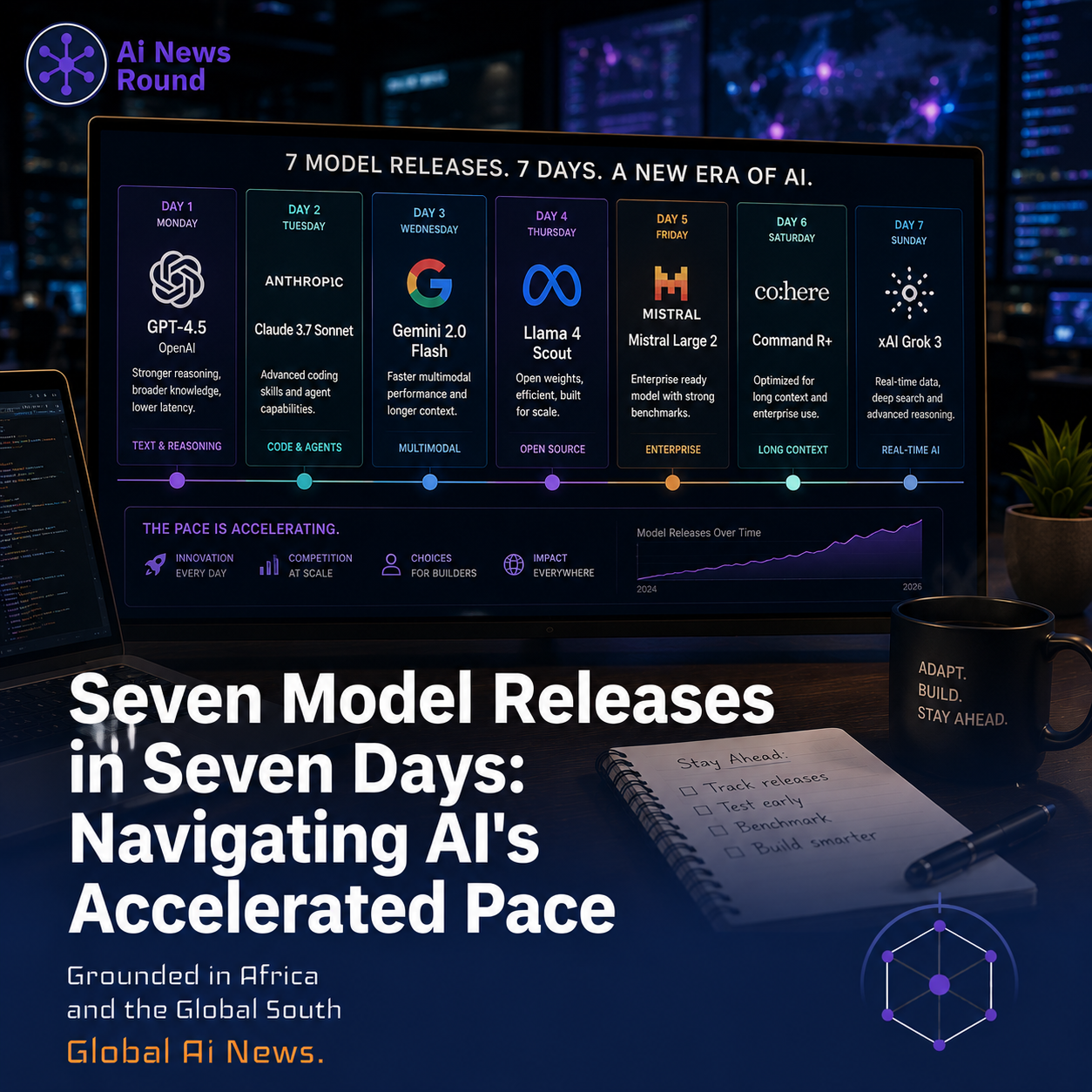
Between July 17 and July 23, 2026, major frontier labs shipped seven model releases in a single week. Here is how developer teams can evaluate model performance without fatigue.
Runway Gen-4.5 provides marketing teams and creators with creative control, reference-image support, and shot-to-shot character consistency. Here is why it has become the default video platform.
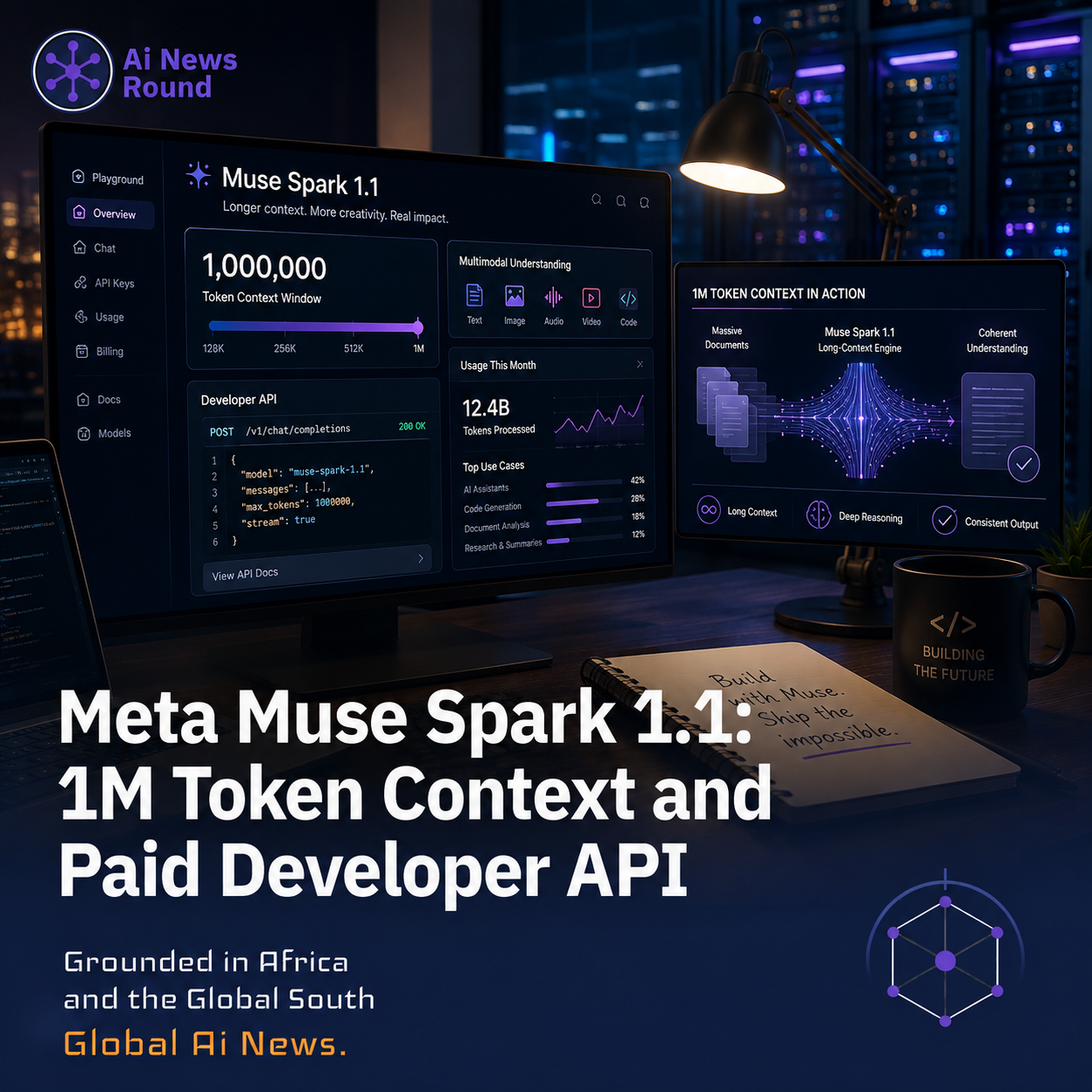
Meta launches Muse Spark 1.1 with a 1-million-token context window, its first paid developer API, and cross-device computer-use capabilities. Here is what it means for enterprise automation.
Venture capital continues pouring into AI infrastructure, inference platforms, and bio-tech models while consumer apps take a back seat. Here is the breakdown of key raises from Together AI, Fireworks AI, and Neko Health.
A complete guide to top image and video AI generators rated by actual commercial utility. Discover where Midjourney V8, FLUX, Adobe Firefly, and Runway Gen-4.5 excel—and why Sora is sunsetting.