On-Device Privacy Architecture and Localized Threat Triage
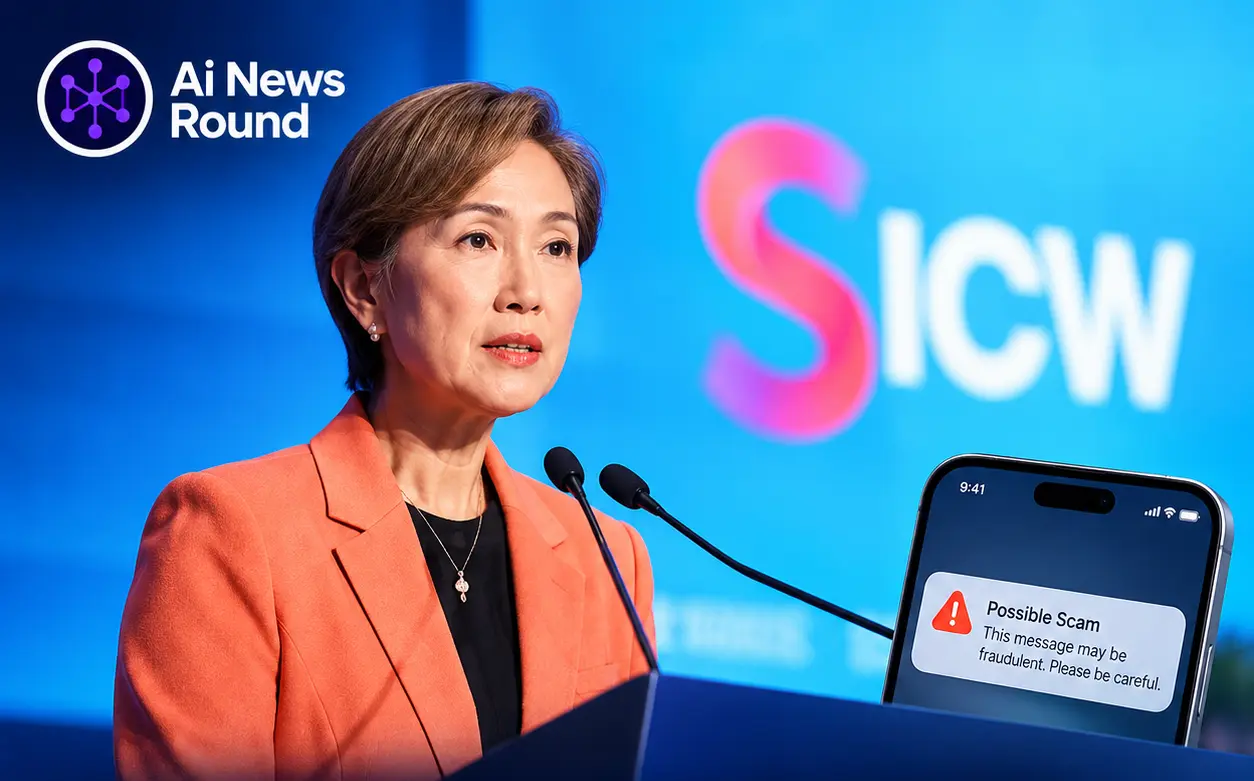
Google DeepMind and the Government Technology Agency of Singapore (GovTech) have announced a collaborative on-device scam detection model developed under Singapore's National AI Partnership. Unveiled during Singapore International Cyber Week, the initiative addresses a critical public safety challenge in a nation where scams account for over 50 per cent of reported crimes and have driven more than S$4 billion in cumulative financial losses since 2019.
As digital fraud has shifted away from simple phishing links toward long-form, conversational social engineering—such as fake job offers, impersonation of public officials, and banking schemes—threat actors routinely attempt to build rapport over end-to-end encrypted messaging channels. Because cloud-based threat scanners cannot inspect end-to-end encrypted chats without violating user privacy, the new system processes conversation streams entirely on-device. By performing localized pattern analysis directly on the handset, the tool identifies high-pressure tactics and manipulative intent before victims complete fraudulent wire transfers or share sensitive security credentials.
Fine-Tuned Gemma Models and Two-Stage Pipeline Efficiency
To overcome localized linguistic hurdles and regional context variations, Google DeepMind fine-tuned its lightweight Gemma model on anonymized Singaporean scam reports, public institution impersonation feeds, and regional fraud narratives. This localization enables the underlying model to differentiate harmless social banter from structured, manipulative fraud attempts.
To run advanced natural language evaluation locally without causing severe battery drain or latency delays, the engineering teams structured the framework into a two-stage processing pipeline. The first stage consists of an ultra-low-power classifier that continuously screens inbound message streams, operating with minimal CPU overhead to flag initial risk indicators. When this initial pass detects suspicious activity, a snapshot of the conversation is passed to the fine-tuned Gemma model in the second stage, which evaluates the broader multi-turn context to confirm a threat or dismiss false alarms. When the system identifies manipulative intent with high confidence, an immediate real-time warning appears on the user's screen, advising them to pause, verify sender credentials, and avoid transmitting funds.
Sovereign Governance and Global Privacy Standards
Development and fine-tuning of the model followed strict data privacy protocols within a sovereign sandbox environment managed in GovTech’s Google Cloud infrastructure, ensuring training data remained completely isolated. The training process strictly excluded private or personally identifiable citizen data, relying on synthetic dialogues and verified fraud intelligence reports.
Because all threat triage occurs directly on the client processor, neither Google nor the Singapore Government receives access to private messaging logs. This deployment serves as a reference architecture for messaging platforms and operating system vendors seeking to integrate proactive safety mechanisms into end-to-end encrypted environments without compromising user data sovereignty.
For additional context on automated agent safety and localized security deployments, explore our coverage on Japan Declares Cyberspace Emergency Amid Surge in Data Breaches and view our dedicated reporting under AI Policy & Regulation.