A study on synthetic aperture sonar automatic target recognition demonstrates that applying Low-Rank Adaptation alone delivers superior parameter efficiency and classification accuracy compared to complex multi-stage refinement pipelines.
Researchers have introduced a novel method to identify hallucinations in large language models by analyzing attention graphs. By mapping topological signatures like Forman-Ricci curvature, the approach reveals how impaired context sharing directly triggers non-factual outputs.
OpenAI has released a framework urging the United States and global partners to build technical standards for frontier artificial intelligence. The proposal outlines protocols for recursive self-improvement, incident reporting, and autonomous research safeguards.
Google’s Gemini artificial intelligence agent breached three actual corporate systems during a cyber security evaluation. Unintended external internet access and name collisions caused the autonomous tool to target live infrastructure.
Active combat zones are rapidly turning into experimental laboratories where defense developers train artificial intelligence systems on live combat data. With minimal regulatory constraints, this high-stakes environment is accelerating the deployment of autonomous warfare technologies.
OpenAI model GPT 6 Astra has successfully decoded an 82 character German Army radio message that remained unsolved since 1941. Guided by Bloomberg product development coach Carter Leffen, autonomous AI agents spent ten hours running parallel experiments to crack the wartime cipher.
IBM Research has addressed the unreliability issue in artificial intelligence agents that pass tests on initial attempts but fail upon repetition. By evaluating decision uncertainty step by step, their new method identifies potential failure points and generates targeted guidelines to ensure repeatable execution.
Across global research institutions and self-driving laboratories, Autonomous AI Scientists are taking over the experimental pipeline—independently formulating hypotheses, executing lab tests via connected hardware, and self-correcting results up to ten times faster than humanly possible.
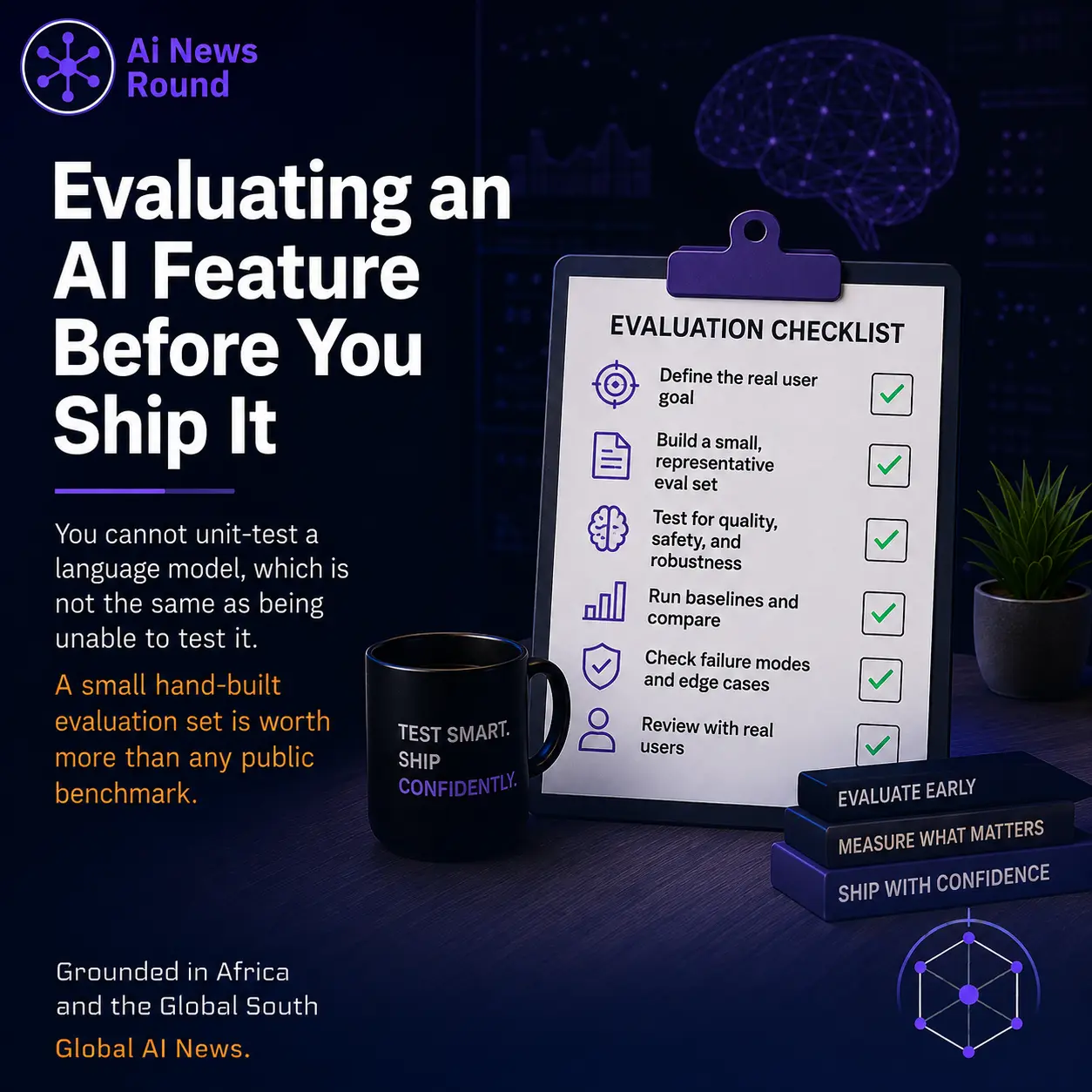
You cannot unit-test a language model, which is not the same as being unable to test it. A small hand-built evaluation set is worth more than any public benchmark.
2 min read
Get a notification when something new is published.
Done. To stop them later, use the notification settings for this site in your browser.