
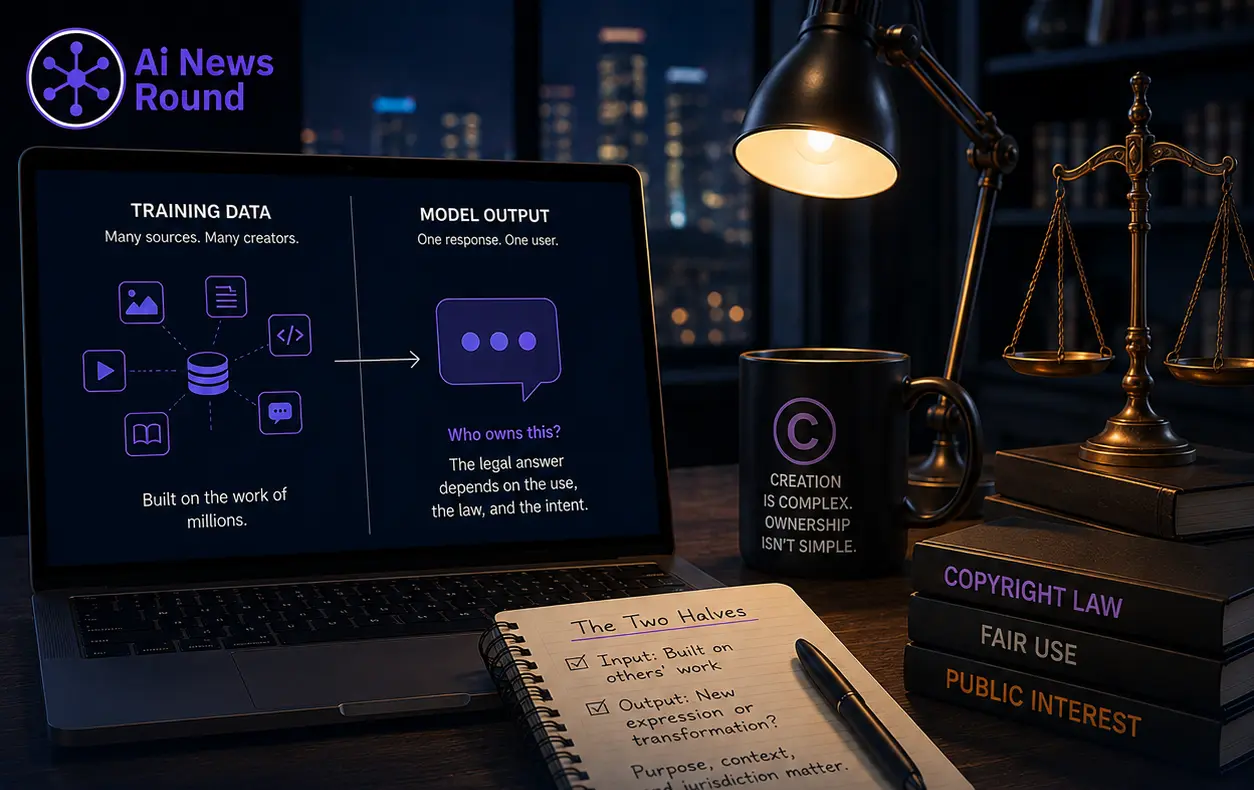
The copyright argument around generative systems is really two arguments. They are frequently discussed as one, which is why the conversation rarely progresses.
The input question
Was it lawful to train on this material? This turns on national exceptions to copyright — fair use in the United States, text and data mining provisions in the European Union and the United Kingdom, and varying positions elsewhere. It is being litigated in several jurisdictions and the outcomes are not consistent. Anyone stating confidently that the answer is settled is describing a preference.
Some jurisdictions have added a mechanism for rights holders to opt out of mining, which shifts the question from whether it is allowed to whether the objection was properly expressed and properly honoured.
The output question
Who owns what comes out, and can it infringe? These have clearer answers than the input question. Several copyright offices have taken the position that material generated without meaningful human authorship is not protectable — which means output a business relies on commercially may not be defensible against copying. And output that closely reproduces a specific protected work can infringe regardless of how the model was trained, in the same way any other reproduction would.
What a company should actually do
Keep a record of what was generated and what a person contributed, because the human contribution is what carries any claim to ownership. Read the vendor's indemnity carefully — several now offer one, and the conditions attached to it are the important part. Do not use generated material in a context where exclusivity matters without legal advice. And treat anything that reproduces a recognisable style or a specific work as a risk regardless of what the model's terms say.