
Unified Digital Interface for Federal Agencies
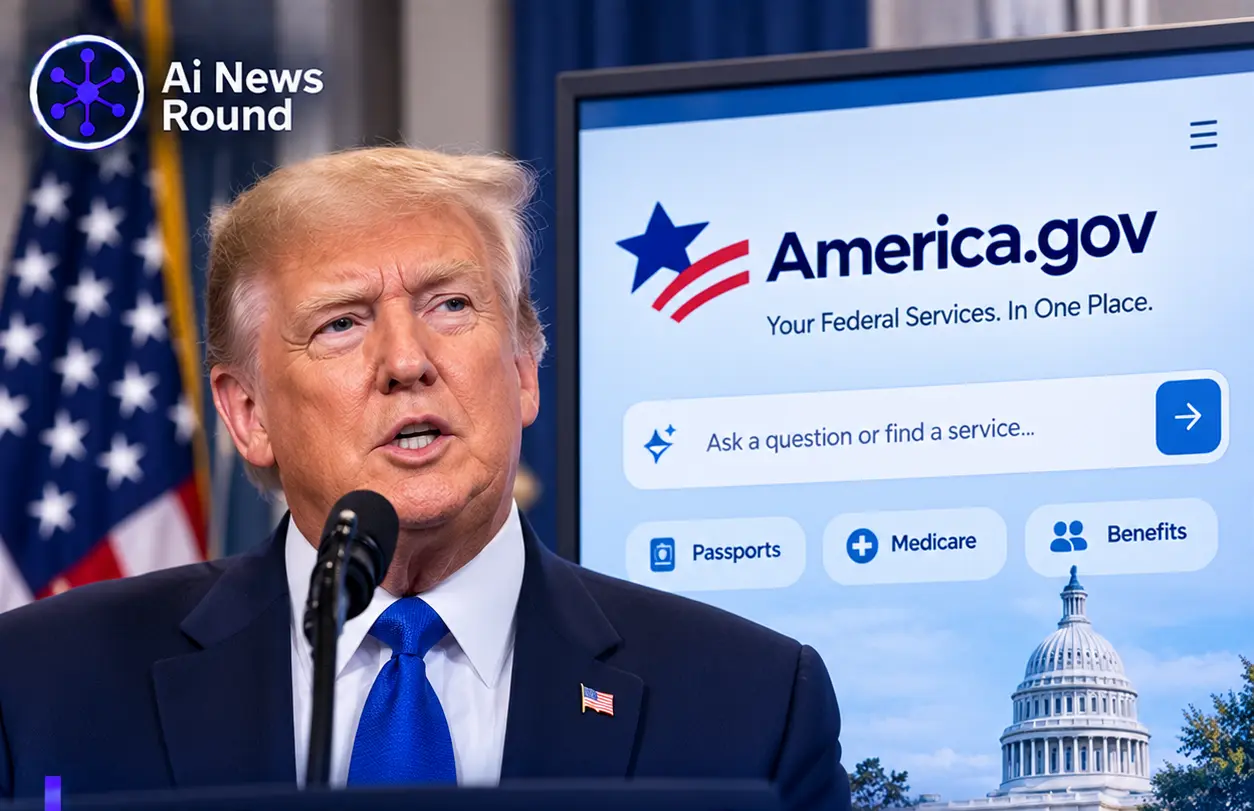
The US administration has officially launched America.gov, an artificial intelligence portal intended to function as a conversational gateway for citizens interacting with federal departments. Developed under the White House National Design Studio and operated by the General Services Administration (GSA), the platform indexes information across roughly 29,000 official government websites to answer user inquiries in natural language.
Rather than forcing individuals to manually search through disjointed agency portals, America.gov processes text and voice inputs across multiple languages, including English, Spanish, and French. US Chief Design Officer Joe Gebbia confirmed that the platform operates on a multi-model architecture incorporating both Google's Gemini and xAI's Grok engines, establishing a diverse technical foundation for federal software procurement.
Phase One Functionality and Feature Roadmap
The initial deployment of America.gov operates primarily as an informational search and navigation engine. Users can submit natural language queries or upload official documents to retrieve structured summaries and direct links to relevant federal agency procedures. The launch phase covers common administrative inquiries, such as guidelines for purchasing national park passes, updated address requirements, and instructions for renewing passports.
Future software updates planned for rollout through 2027 aim to transition the portal from an informational interface into an active transaction engine. Planned capabilities include enabling users to execute end-to-end administrative tasks directly within the chat interface, such as submitting passport renewals, tracking student loan statuses, and completing real-time Medicare enrolments.
Privacy Guardrails and Accuracy Challenges
To address public data privacy concerns, America.gov currently operates without requiring mandatory user account registration, and interaction logs are automatically excluded from long-term storage. Additionally, the platform is programmed to decline requests involving private financial investments, legal representation, or individualized tax calculations.
Despite strict domain-indexing guardrails, policy analysts continue to examine potential hallucination risks inherent to large language model outputs. Because early interactions generated occasional factual inconsistencies on historical and political topics, officials recommend that users verify time-sensitive application deadlines against the direct government agency links supplied alongside every generated response.
For additional context on government tech mandates and model deployments, read our previous breakdown on US President Trump Orders Federal Rebrand of AI to Super Intelligence or explore our dedicated reporting under AI Policy & Regulation.